🛡️ Butyl Rubber Waterproof Tape: Aluminum Foil, Uv Resistant, Weatherproof
🛡️ Butyl Rubber Waterproof Tape: Aluminum Foil, Uv Resistant, Weatherproof

Couldn't load pickup availability

🛡️ Butyl Rubber Waterproof Tape: Aluminum Foil, Uv Resistant, Weatherproof
🛡️ Stop Water at the Weak Point
Seal the Leak Before a Small Crack Becomes a Bigger Repair
Press a flexible aluminum-and-butyl barrier over troublesome cracks, seams and joints. The highly tacky sealing layer conforms to the repair line while the foil face helps shield it from rain, sun and changing weather.

The Drip Is Only the Warning
Block the Path Water Uses to Get Back In
A leak often follows the same exposed seam again and again. Instead of covering only the visible drip, bridge the vulnerable repair line with a continuous strip that helps block water, air and dust.

A Quick Spot Patch
- May cover only the most visible part of the leak
- Can leave the surrounding seam exposed
- May struggle around corners and long joints
A Continuous Butyl Barrier
- Bridges the crack and the surrounding repair line
- Soft, pressure-sensitive adhesive conforms as you press
- Cut the roll to the exact length your job requires
Why the Seal Keeps Working
Weather-Facing Foil Outside. Permanently Soft Butyl Beneath.
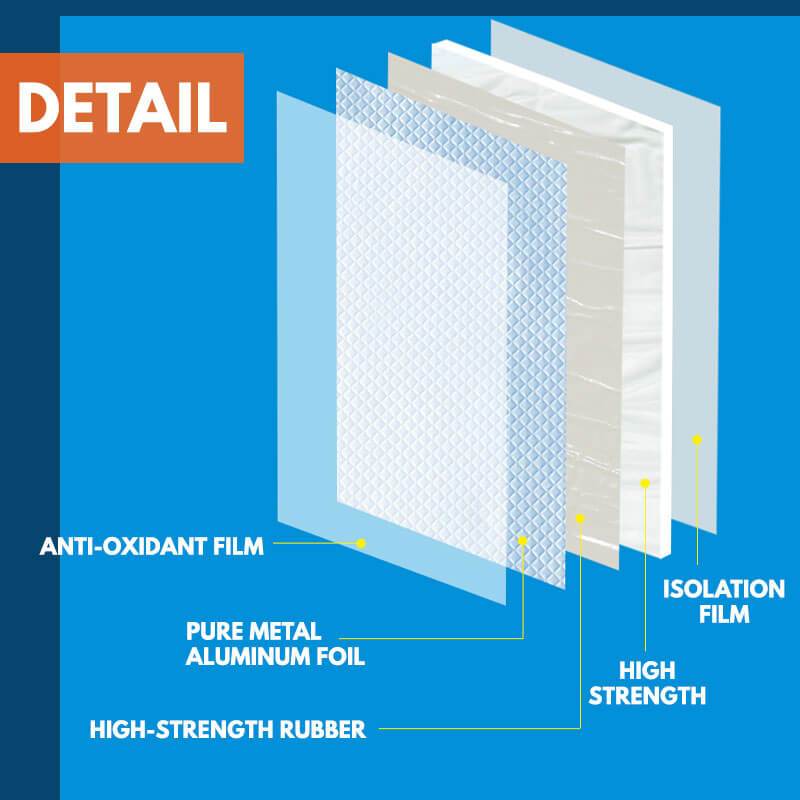
The aluminum foil forms the exposed protective face while the ever-tacky butyl layer stays flexible beneath it. Pressed firmly onto a clean, dry surface, the two-layer construction helps create an immediate seal against water, air, dust, moisture and unwanted odors.

Protective Foil Face
Helps shield the sealed line from water, UV exposure and outdoor weather.
Ever-Tacky Butyl
Remains soft and pressure-sensitive so it can settle into prepared uneven areas.
Full-Length Coverage
Creates one continuous barrier across a crack, seam or joint—not just one point.
Follows the Repair—Not the Other Way Around
Shape It Around Curves, Corners and Long Uneven Seams
Rigid patches are awkward where leaks actually happen. This flexible strip follows compatible flat, rounded and angled surfaces, helping you press the sealing layer into the contour below.

Flat Surfaces
Cover seams across panels, flashing and other prepared areas.
Curved Areas
Follow compatible rounded sections without a rigid patch plate.
Corners
Press into the angle carefully for contact along both sides.
Long Seams
Cut the roll to cover the length of the vulnerable joint.
One Roll. A Long List of Leak-Prone Places.
Reach for It When Roofs, Gutters, Pipes or Panels Need Attention
Keep a roll ready for compatible sealing jobs around roofing and cladding, HVAC housings and ducts, caravan panels, vehicle glass areas and metalwork. Measure the problem, cut what you need and save the rest for the next repair.

Roof & Cladding
Cover compatible seams, joints and small damaged areas.
Gutters & Pipes
Wrap or bridge suitable leak-prone connections and cracks.
RV & Vehicle Areas
Use around compatible panels, roofs, windows or tail-light areas.
HVAC & Ducts
Seal compatible housing seams, flanges and circular duct joints.
Protection Beyond the First Rain
Built for Repairs Exposed to Water, Sun and Changing Weather
The foil-faced construction is described as resistant to water, UV exposure, heat, chemicals and changing weather. The high-tack butyl layer is also designed to maintain adhesion in lower-temperature conditions when applied correctly.

UV Resistant
The foil-faced construction is intended for areas exposed to sunlight.
Moisture Barrier
The butyl layer and foil surface work together across the sealed line.
Resistant Surface
Designed to withstand everyday exposure to heat, chemicals and outdoor weather.
Cold-Weather Tack
For easier installation in winter, warm the tape gently before pressing it down.
No Complicated Repair Routine
Clean It. Cut It. Press It. Let the Seal Set.
A better bond begins with a clean, dry surface and firm pressure. Plan the placement before removing the liner—the butyl layer is deliberately strong and highly tacky.

Clean & Dry
Remove water, oil, dust and loose debris from the repair surface.
Measure & Cut
Allow enough coverage beyond the crack or seam on every side.
Peel & Position
Wear gloves, remove the liner gradually and avoid touching the adhesive.
Press Firmly
Smooth from the center outward and do not peel it back within 24 hours.
Buy for Today’s Leak—and the Next One
Choose the Roll Length That Matches Your Repair List
Pick the shorter roll for a focused repair or the longer roll when multiple seams, joints and outdoor trouble spots need coverage.
Get a Better Seal the First Time
The Questions Worth Answering Before You Press It Down
Surface preparation, temperature and placement all affect how well the tape makes contact. Check these practical details before starting the repair.
Can I apply the tape directly over a wet leak?
For stronger adhesion, stop the active water flow and apply the tape to a clean, dry surface. Remove moisture, oil, dust and loose material before pressing it down.
What is the tape made from?
It combines an aluminum foil surface with a pressure-sensitive butyl rubber sealing layer and a removable backing liner.
Can it be used outdoors?
Yes. The supplied product information describes the tape as water-, UV- and weather-resistant for compatible indoor and outdoor sealing applications.
What surfaces can it be used on?
The product is presented for compatible glass, metal, roofing, cladding, ducts, HVAC housings, caravan panels and similar sealing surfaces. Test a small area first when compatibility is uncertain.
What should I do in cold weather?
Warm the tape gently with a hair dryer before installation so the adhesive layer is easier to press into the prepared surface.
Can I reposition it after application?
Plan the placement before pressing because the butyl layer is highly tacky. Smooth it firmly into position and do not peel it back within the first 24 hours.
The Best Time to Seal a Leak Is Before It Spreads
One Roll Between a Small Leak and a Much Bigger Weekend Project
Keep this cut-to-fit repair tape within reach, so the next vulnerable seam can be cleaned, covered and protected before repeated exposure creates more work.